How Do I Know Which Syllable to Stress in English Words?
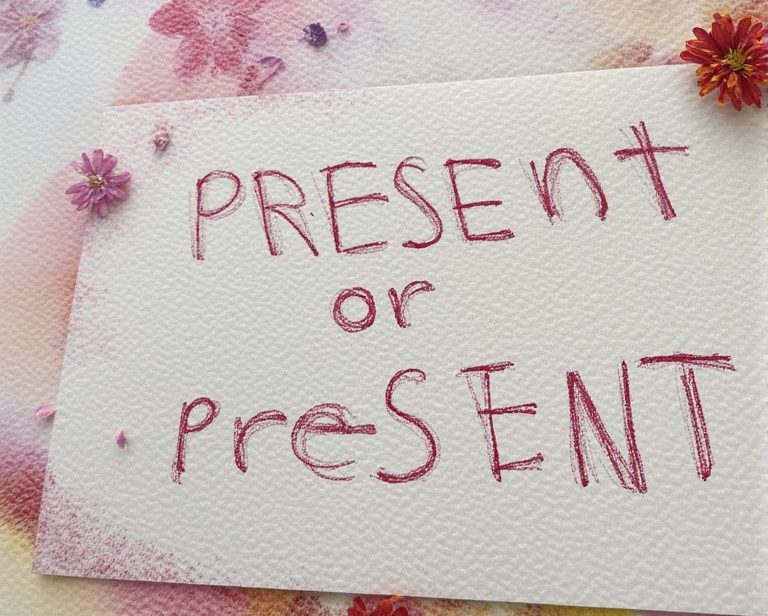
Is it ADdress of adDRESS?
It depends...
Learn how English word stress changes, see common noun/verb pairs, suffix rules, and pronunciation tips for clearer, natural speech.
Shifting Syllable Stress in English
Why Does English Syllable Stress (or Word Stress) Change? How Can I Learn It?
Many English learners ask why the stress or emphasis on a syllable changes in words that look similar. This is very common in English and can be confusing! Understanding syllable stress shifts can improve your pronunciation, listening, and confidence.
English words sometimes change which syllable is stressed depending on their form or function in a sentence. Stress refers to the part of the word we pronounce more strongly. This can affect pronunciation, rhythm, and meaning.
Think about this example:
PHOtograph-phoTOGraphy-photoGRAPHhic
Shifting stress is a major pronunciation challenge because:
- Misplaced stress can cause misunderstanding
- English doesn’t mark stress in writing
- It’s key for natural intonation
This article explains common patterns of stress shifts with plenty of examples grouped by type.
Why Stress Shifts Happen
Stress often changes when:
- A word shifts from noun to verb
- A suffix changes the word form
- Sound patterns and natural rhythm influence pronunciation
The pattern of syllable stress shifts in English has deep historical and linguistic roots tied to its complex evolution and sound system.
Origins and Reason for Stress Shifts
- Germanic Roots and Initial Stress:
Old English, derived from Germanic languages, generally placed stress on the first syllable of words. This feature created a rhythm favoring initial stress, especially in native words. This is why many common English words still follow this pattern today, such as FAther, SISter, and WATer.
- Influence of Romance Languages:
After the Norman Conquest (1066), English absorbed many French and Latin words, which often had stress on the final or penultimate syllable (the last or second-last syllable). This introduced a competing rhythm pattern into English, particularly for loanwords.
- Need to Differentiate Word Types (Nouns vs. Verbs):
The stress shift pattern in two-syllable words (e.g., REcord (noun) vs. reCORD (verb)) likely developed to help speakers distinguish word functions clearly—avoiding confusion between nouns and verbs that share the same spelling but different meanings. Placing stress differently changes the word's rhythm and pronunciation enough to signal different uses.
- Natural Rhythm and Ease of Pronunciation:
English favors alternating stressed and unstressed syllables, creating a natural rhythm or "beat" that makes speaking smoother and easier. Stress shifts help maintain this rhythm so words and sentences flow better, avoiding monotonous or awkward pronunciations.
Common Noun–Verb Stress Shifts
Many two-syllable words have stress on the first syllable when they’re nouns, but on the second syllable when they’re verbs.
The two words can have different meanings depending on which syllable is stressed.
Noun
Stress is on the first syllable
REcord
A physical or digital item that stores music or information.
PREsent
A gift; something given to someone.
CONduct
The way a person behaves or manages something.
PERmit
An official document allowing permission.
CONtent
The information or material in a book, website, or speech.
SUBject
A topic or area of study.
PROduce
Fresh fruits and vegetables.
CONtest
A competition or event where people compete.
IMport
Goods brought into a country.
EXport
Goods sent out of a country for sale.
CONtract
An official agreement between two or more parties.
REfuse
Garbage or waste material.
SURvey
A study to gather information or opinions.
INcrease (also its opposite: DEcrease)
A rise or growth in amount or number.
DEsert
A dry, sandy region with little rainfall.
OBject
A thing that can be seen or touched.
Verb
Stress is on the second syllable
reCORD
To capture sound, video, or data for later use.
preSENT
To show, give, or introduce something to others.
conDUCT
To organize, direct, or carry out an activity.
perMIT
To allow or give permission.
conTENT
To make someone feel happy, satisfied, or pleased.
subJECT
To cause to experience something, often unpleasant.
proDUCE
To make or create something.
conTEST
To challenge or dispute something.
imPORT
To bring goods or services into a country.
exPORT
To send goods or services to another country.
conTRACT
To become smaller, to catch a disease, or to hire someone.
reFUSE
To decline or say no to something.
surVEY
To examine or look carefully at an area or situation.
inCREASE (also its opposite: deCREASE)
To become larger or make something larger.
deSERT
To leave or abandon someone or something.
obJECT
To express disagreement or disapproval.
Examples in context
Here are example sentences for each pair of noun-verb syllable stress shifts. Try saying these aloud and notice how the emphasis changes.
1. Record
Noun: I listened to an old REcord yesterday.
Verb: I need to reCORD this meeting.
2. Present
Noun: She gave me a beautiful PREsent.
Verb: I will preSENT my ideas tomorrow.
3. Conduct
Noun: The CONduct of the experiment was careful.
Verb: The teacher will conDUCT the class today.
4. Permit
Noun: I got a new PERmit to park there.
Verb: I will perMIT you to leave early.
5. Content
Noun: The website has a lot of interesting CONtent for learners.
Verb: She seems to conTENT herself with simple pleasures.
6. Subject
Noun: Math is my favorite SUBject.
Verb: They will subJECT the candidate to an interview.
7. Produce
Noun: Fresh PROduce is sold at the market.
Verb: The factory will proDUCE more goods this month.
8. Contest
Noun: She won first prize in the CONtest.
Verb: They will conTEST the election results in court.
9. Import
Noun: The IMport of goods has increased.
Verb: The country will imPORT more cars.
10. Export
Noun: The EXport of electronics is high.
Verb: They will exPORT agricultural products.
11. Contract
Noun: The company signed a new CONtract yesterday.
Verb: The muscles conTRACT when you exercise.
12. Refuse
Noun: The city has a system for collecting REFuse every week.
Verb: I reFUSE to accept unfair treatment.
13. Survey
Noun: The SURvey showed that most people prefer online shopping.
Verb: The team will SURvey the area tomorrow.
14. Increase
Noun: There was a significant INcrease in sales last quarter.
Verb: The company plans to INcrease production next year.
15. Desert
Noun: The Sahara DESert is the largest hot desert in the world.
Verb: They will DESert the old vehicle for a new one.
16. Object
Noun: Something OBjected to the plan during the meeting.
Verb: I OBject to the new policy.
Here are some more noun-verb pairs that follow this pattern:
the ADdress-to adDRESS
the IMpact-to imPACT
the PROgress-to proGRESS
the IMplant-to imPLANT
the PROject-to proJECT
the PROtest-to proTEST
the REfund-to reFUND
the SUSpect-to susPECT
the TRANSfer-to transFER
the TRANSport-to transPORT
the UPdate-to upDATE
Some adjective-verb pairs also display such syllable stress variations:
REbel (forces) - to reBEL
PERfect (home)-to perFECT
FREquent (visitor ) - to freQUENT
Exceptions
These words can be used as both nouns and verbs but do not change their stress pattern when shifting between noun and verb forms. Just a few examples that are often problematic:
the CONtact - to CONtact
the reQUEST- to reQUEST
the PURchase - to PURchase
the INvoice - to INvoice
Interesting Syllable Stress Shifts with Suffixes
Many English learners may not realize that adding suffixes to a word can change where the stress falls. These changes might seem subtle but are very important for correct pronunciation and natural speaking rhythm. For example, with the word "photograph," stress is on the first syllable, but when the word changes to "photography" or "photographic," the stress shifts to a different syllable.
These kinds of stress shifts happen regularly with certain suffixes and create patterns that you can recognize and practice.
Can you guess where the syllable stress is in these words?
(Take a minute to try before looking at the answers.)
- communicate-communication
- responsible-responsibility
- economy-economic-economical-economist
- photograph-photography-photographic
- concept-conceptual-conceptualise-conceptualisation
- identify-identity-identifiable-identification
Did you get them right?
- comMUnicate-communiCAtion
- reSPONsible-responsiBILity
- eCOnomy-ecoNOmic-ecoNOmical-eCOnomist
- PHOtograph-phoTOGraphy-photoGRAPHhic
- CONcept-conCEPtual-conceptualiZAtion-conCEPtualize
- iDENtify-iDENtity-identiFIable-identifiCAtion
Common stress patterns with suffixes
There are some common patterns that help you get the syllable stress right.
1.Stress the syllable just before the following suffixes: “-cian,” “-tion,” “-sion,” “-ic,” and “-ical.”
- elecTRIcian
- techNIcian
- preCIsion
- diVIsion
- radiAtion
- motiVAtion
- eLECtric
- eLECtrical
- problemATic
- matheMATical
- bioLOGical
2. Stress the suffix itself for words ending in: “-ee ”, “-ette ”, “-eer ”, “-ese ”.
- refugEE, employEE, guarantEE
- cigarETTE, palETTE
- enginEER, volunTEER,
- JapanESE, ChinESE, PortuguESE
3. Suffixes that usually do NOT change the original stress: “-ly ”, “-ness ”, “-ful ”
HAPpy / HAPpiness / HAPpily
PAINful / PAINfully
There are other patterns for syllable stress shifts with suffixes in English, and the examples in this article do not cover every possibility, rather focuse on the most 'reliable' ones. Some rules may have exceptions, and certain patterns might not apply perfectly in every case. Additionally, syllable stress can vary depending on whether you’re speaking British or American English.
*Top Pronunciation Tip*: The Magic of the Schwa Sound in Unstressed Syllables
When a syllable in a word is unstressed, its vowel sound often changes to a very relaxed and soft sound called the schwa /ə/. Instead of pronouncing the vowel clearly like in the stressed syllable, you say an "uh"
/ə/ sound—almost like a quick, lazy /ə/ "uh."
This happens because English speakers naturally make unstressed syllables shorter and less clear to keep the rhythm of the language smooth and natural. This reduced schwa sound is different from the clear, strong vowel sounds in stressed syllables.
For example, in the noun REcord (stress on 1st syllable), the second syllable uses the schwa sound and is said softly like "RE-cərd." But in the verb reCORD (stress on 2nd syllable), the first syllable becomes unstressed with a schwa sound: "rə-CORD."
Learning to recognize and produce the schwa sound will help your pronunciation sound more natural and fluent!
Now You Know Why Word Stress is Important
- Communication:
Correct word stress is crucial for clear and natural-sounding communication in languages like English.
- Meaning:
In English, word stress can change the meaning of a word. For example, RE-cord (noun) versus re-CORD (verb).
- Rhythm:
Mastering word stress helps in understanding and producing the rhythm of a language.
Keep Practising with Patience and Curiosity!
Learning about syllable stress and the changes it undergoes can feel challenging at first, but practice will make it easier every day. Remember, understanding stress patterns helps you speak clearly and be understood by others.
Use what you’ve learned here to listen carefully, repeat words and sentences, and check stress in a dictionary whenever you’re unsure. Don’t worry about mistakes—each one is a step closer to confident English.
For more topics and tips visit the Advanced Level English Resources Page